


Performance recruiting: definition, advantages & examples
Performance recruiting is a modern approach in human resources. It involves actively advertising a company’s job vacancies in order to reach the right target group.
In times of a shortage of skilled workers, it is becoming increasingly difficult for companies to find suitable employees. Performance recruiting offers an effective solution here and is therefore playing an increasingly important role in recruitment.
In the following sections, we will explain Performance Recruiting, its key components and its benefits in more detail.
Performance-based recruiting: a detailed explanation
Performance recruiting, also known as performance-based recruiting, is an effective method for attracting highly qualified employees. It uses techniques from psychology and online and performance marketing to reach and attract potential candidates.
The concept of performance-based recruiting is simple: to find the right people for an open position and motivate them to apply. This is achieved by placing advertisements, e.g. on social media such as Facebook, Instagram and other platforms.
Targeting is an important aspect of performance-based recruiting. Ads are designed and placed in such a way that they reach exactly those people who could be suitable for an open position. This is achieved by using specific keywords, demographic characteristics or interests.
The use of “emotional triggers” in the ads is also important. These are words or phrases that evoke an emotional response in candidates and motivate them to click on the ad and apply. An example of this is the sentence “Tired of double shifts?”. It is specifically aimed at nurses who may be suffering from stress and the widespread staff shortage in the industry.
Key components of performance recruiting
Performance recruiting is based on the following three key components.
Efficient performance analysis in the recruiting process
In traditional recruiting methods, companies often only look at the qualifications and experience that candidates have on paper. Performance recruiting goes one step further. Here, the candidate’s performance is analyzed throughout the entire recruitment process. This means that companies not only look at what candidates have done in the past, but also at how well they perform certain tasks during the application process.
Use data and metrics to identify high-performing candidates
Performance recruiting uses data and metrics to find the best candidates. To do this, a complete picture of an applicant’s skills, experience and potential is created. The aim is to hire employees with high performance and motivation. Therefore, not only the skills and experience of the candidates are taken into account, but also their attitude and fit with the corporate culture.
With this data, companies can make informed decisions and attract the best talent to their team. For example, they could collect data on how quickly candidates respond to messages, how well they perform in interviews or how well they work with others in the team.
Use of performance-based recruitment strategies and procedures
In performance recruiting, candidates are given tasks (e.g. work samples, quizzes or structured interviews) during the recruitment process to demonstrate their skills and potential. In this way, companies can ensure that they hire candidates who are a good fit for the company culture and business goals.

Advantages of performance recruiting
The importance of efficient recruiting cannot be overestimated. There are four main advantages that particularly characterize performance recruiting:
- Improving the quality of new hires: With performance recruiting, companies can target their search for the best candidates. By using data-driven processes and precise targeting methods, companies can address the right target group and attract top-qualified applicants. This leads to an improvement in the quality of new hires.
- Increase team productivity and performance: Performance recruiting can speed up the application process and make it more efficient. By quickly identifying and hiring top candidates, companies can build their teams faster. Team productivity and performance are improved by the good fit of new hires.
- Reducing employee turnover: Targeted recruiting can reduce employee turnover. If employees fit in well with the corporate culture and the requirements of their role, they are more likely to stay with the company in the long term.
- Promoting a performance-oriented corporate culture: Performance recruiting is based on performance and results. By using key figures to measure the success of a recruiting campaign, it promotes a performance-oriented corporate culture.
Examples of performance recruiting in practice
Case study 1: Successful recruitment of a top sales employee through performance-oriented recruiting
A company was looking for a top Sales Representative to accelerate their growth. They created a detailed job description that highlighted the specific skills and experience they were looking for.
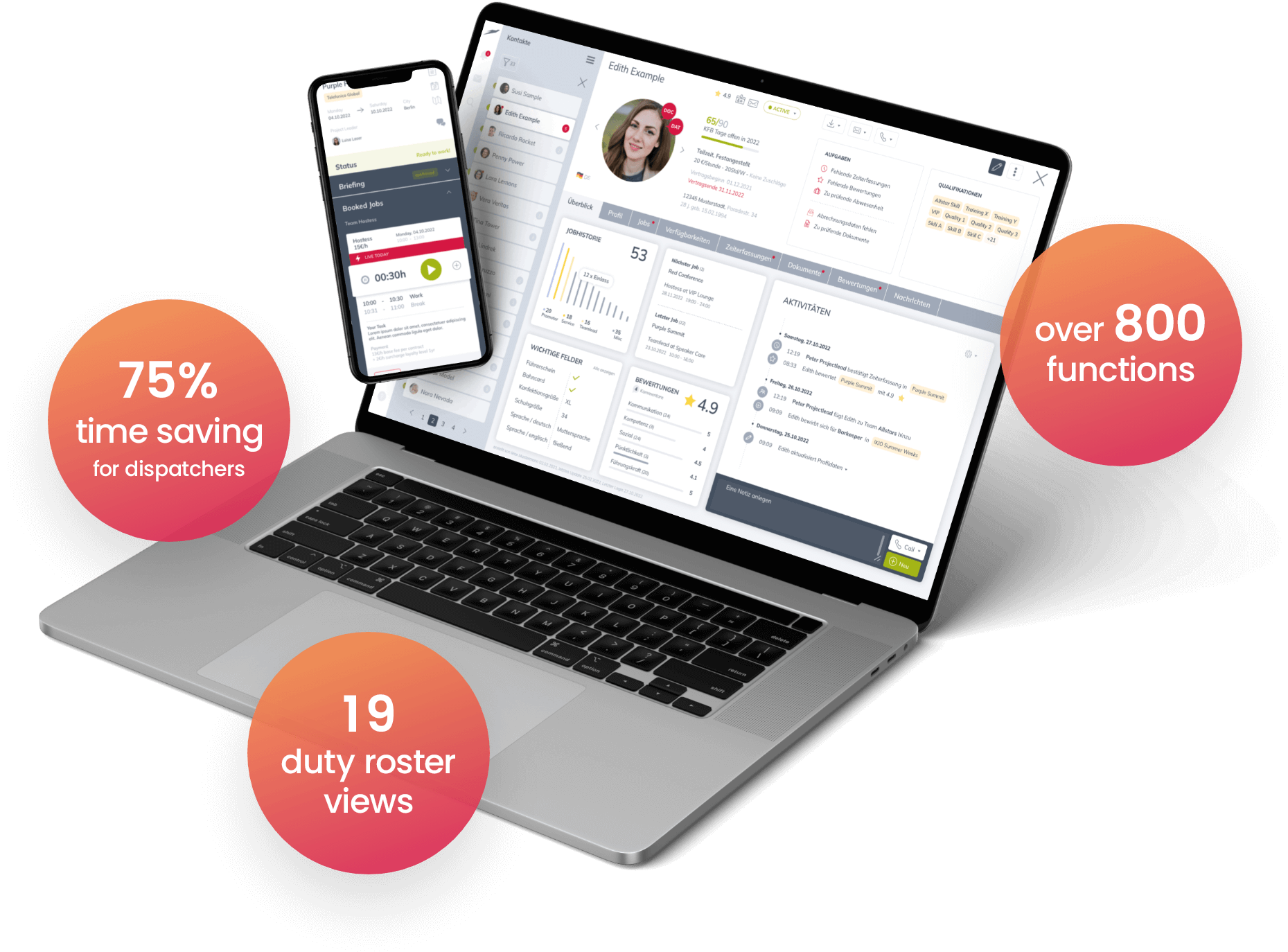
Using Teamhero software, the company was able to create and publish a job advertisement with just a few clicks. The company advertised the job ad on platforms such as LinkedIn and Indeed. It used specific keywords and demographic targeting methods to ensure the ad was seen by the right candidates.
The company then carried out a series of simulation-based tasks that resembled actual sales challenges. Among other things, they asked the candidates to simulate a sales process and evaluated their performance.
In the end, the company hired a sales representative who not only had the necessary qualifications, but also actually performed excellently. Within a few months, this new employee exceeded sales targets and became a key driver for the company’s growth.
Case study 2: Increasing team performance through strategic talent acquisition and performance analysis
One company was struggling with its customer service team. The team simply could not keep up with rising customer expectations. The company needed new team members who brought specialized skills and experience to improve team performance and increase customer satisfaction.
The management decided on a strategic talent acquisition strategy. First, it conducted a thorough performance analysis of the existing team: It looked at various performance metrics, such as customer satisfaction ratings, response times and the number of customer issues resolved. The analysis revealed that the team was struggling to respond quickly to customer inquiries and resolve customer issues effectively.
Based on this, the company created a clear profile of the type of talent it needed: people with strong communication skills, customer service experience and the ability to work under pressure.
To reach these candidates, they created targeted job ads that highlighted the skills and experience they were looking for and advertised them on LinkedIn, Indeed and Glassdoor. They used specific keywords and demographic targeting methods.
The success of the recruitment campaign was tracked using various metrics, including the number of people reached, the number of impressions of the ads, the click-through rate and the conversion rate. They then conducted a structured interview and selection process.
The company used the Teamhero software to manage the applications and select the best candidates. Teamhero was then able to transfer the applicants directly into the employee database. This process enabled the company to significantly improve team performance and increase customer satisfaction.
Conclusion: Performance recruiting – a key to corporate success
Performance recruiting has established itself as an effective recruitment method that helps companies to attract qualified employees and strengthen their teams.
The advantages of performance recruiting are numerous and convincing. By following a few basic principles, companies can conduct effective, targeted recruiting.
If you would like to find out more about how Teamhero can support you in recruiting, we invite you to contact us. We will be happy to advise you.