


How do I conduct a job interview? The right questions
How do I conduct an effective and meaningful job interview as an employer or recruiter? We offer a comprehensive checklist and a collection of relevant questions to help you get to know applicants better and make an informed decision.
We look at every step of the job interview together. You will learn how you can use targeted questions in the interview to delve deeper into the candidate’s qualifications and experience and understand their personality and working methods. We will also clarify which questions are legally permissible and which should be avoided.
With this guide, you are ideally equipped to conduct job interviews in a professional, structured and successful manner.

The job interview: Not only important for applicants
The question “How do I conduct a job interview?” is of great importance for recruiters and companies. The interview offers a unique opportunity to assess the suitability of candidates from both a professional and corporate culture perspective.
Assessment of professional suitability
The interview allows employers to delve deeper into candidates’ technical qualifications and professional experience. By asking good questions in the interview, they can develop a better understanding of the candidate’s skills and knowledge.
Understanding of personality and working methods
An interview provides information about the applicant’s personality and working style. Employers can assess how well candidates fit into the team and whether their values and work ethic match the corporate culture.
Avoidance of incorrect appointments
A bad hire can be costly, both financially and in terms of team dynamics. A thorough interview helps to minimize the risk of a bad hire by ensuring that the candidate not only has the required skills, but is also a good fit for the company.
Employer branding
The job interview is also an opportunity for the company to present itself as an attractive employer. A professionally conducted interview can strengthen the company’s image and help attract top talent to the company.
Long-term planning and development
The interview also allows employers to assess the long-term potential of candidates. They can assess how well applicants can develop and contribute to future company goals. This is particularly important for the strategic personnel planning and the promotion of junior managers.
The structure of a successful job interview
A job interview is a crucial opportunity not only to get to know potential employees, but also to make a convincing impression as a company. This requires a structured approach.
Preparation: The foundation for success
Preparation is the be-all and end-all. Think in advance about what questions you want to ask in the interview and what information you want to convey about the company and the vacancy.
In the case of pre-employment screening you should observe the applicable rules and regulations.
Read the application documents carefully and make a note of relevant points. Make sure that the room is suitably prepared for the interview and that all the necessary materials are available.
Phase 1: Greeting and small talk
The first impression counts. Start the interview with a friendly greeting and some small talk. This helps to create a relaxed atmosphere and reduce the applicant’s nervousness. Ask how they got here or offer them something to drink. A relaxed start makes the transition to the more formal parts of the interview easier.
Phase 2: Presentation of the company
Take the opportunity to introduce your company. Tell them something about the history, the corporate culture, the team and the specific tasks of the advertised position. This gives applicants a first impression and provides them with points of reference for their own questions.
Phase 3: Questions for the applicants
Now is the time to ask applicants questions. These should cover professional qualifications as well as personal characteristics and motivation for the position. Ask about previous experience, strengths, weaknesses and professional goals. Avoid standard questions and strive for a real dialog.
Phase 4: Self-presentation of the applicants
Ask the applicants to tell you something about themselves. This gives them the opportunity to present their career and qualifications in a coherent context. Pay attention to how they present themselves and which aspects of their personality and career they emphasize.
Phase 5: Questions from the applicants
Give applicants the opportunity to ask their own questions. This shows their interest in the company and the position. Be prepared to answer their questions openly and honestly to give a clear picture of the job and the company.
Phase 6: Concluding the conversation
At the end of the interview, you should explain the rest of the application process. Inform the applicants when they can expect to hear back from you. Thank them for their time and interest in your company.
How to conduct a job interview: the right questions
Here is a selection of interview questions that will help you to better understand the applicant in various aspects:
Questions about motivation and personality
- Why did you apply for this position at our company?
- This question provides information about the applicant’s motivation and interest in your company and the specific position.
- What are your career goals and how does this position fit in?
- This will tell you more about the candidates’ long-term ambitions and how they would like to shape their career.
- Describe a challenge that you have successfully mastered.
- This question helps you to understand how applicants deal with difficult situations and what problem-solving skills they have.
Questions about working methods
- How do you organize your typical working day?
- Insights into the applicants’ daily work organization can show you how efficient and structured their work is.
- Do you prefer teamwork or do you prefer to work independently?
- This question provides information about how well the applicant could fit into the team dynamic of your company.
- Can you give an example where you have found an innovative solution to a problem?
- This allows you to recognize the creative and innovative thinking of the candidates.
Questions about corporate culture
- What do you know about our company and our corporate culture?
- This question shows how well the applicants have prepared themselves and how interested they are in your company.
- What do you expect from your manager?
- The answer will give you an insight into applicants’ expectations of management and management style.
- How do you deal with feedback, both positive and negative?
- Understanding how to handle feedback is important to assess how candidates can fit into your team and contribute to continuous improvement.
Closing questions
- Do you have any questions for us?
- This final question gives applicants the opportunity to express their own concerns and shows how interested and committed they are.
These questions are a starting point for developing an in-depth understanding of the applicant. They can be adapted depending on the specific position and company context. It is important that the questions are open-ended to encourage honest and detailed answers.
What can I ask in the job interview?
In the context of a job interview, it is essential for recruiters to know which questions may and may not be asked. Only questions that employers have a legitimate interest in answering with regard to the potential employment relationship are permitted.
- Professional skills: Questions about professional and technical skills, knowledge and experience as well as previous professional career, examination and certificate grades are permitted without restriction.
- State of health: Questions about previous illnesses are only permissible if they are relevant to the work, the company and the other employees.
- Non-compete clauses: Questions about existing non-compete clauses with previous employers are permissible.
Job interview questions: these questions are taboo
Questions that interfere with applicants’ personal rights, such as questions about pregnancy, disability or sexual orientation, are not permitted.
- Marriage, pregnancy, (severe) disability: Questions on these topics are generally not permitted.
- Trade union membership: As a rule, trade union membership may not be asked, except in trendy companies or church institutions.
- Religious or party affiliation: These questions are generally not permitted in the entire application process, except in trendy companies.
- Financial circumstances, previous convictions: Employers are generally not allowed to ask about financial circumstances or previous convictions, unless the future job requires this.
Follow-up: an important part of the job interview
The follow-up to a job interview should be treated with the same care as the preparation.
Employers should start documenting their impressions immediately after the interview, while they are still fresh in their minds. This includes evaluating the candidate’s answers to the questions asked, assessing their general presentation and demeanor, and reflecting on the fit with the company culture and team.
Important aspects of follow-up include noting the candidate’s strengths and weaknesses, reviewing the match between their skills and experience and the requirements of the position, and considering their potential for future contributions to the company.
In addition, employers should also reflect on their own performance in the interview in order to further improve future interviews.
Conclusion: How do I conduct a good job interview?
HR professionals who ask themselves the question “How do I conduct a job interview?” will find the most important answers in this article: From careful preparation and appropriate interview questions to important follow-up – every step contributes to finding the best possible candidates for your company and at the same time presenting yourself as an attractive employer.
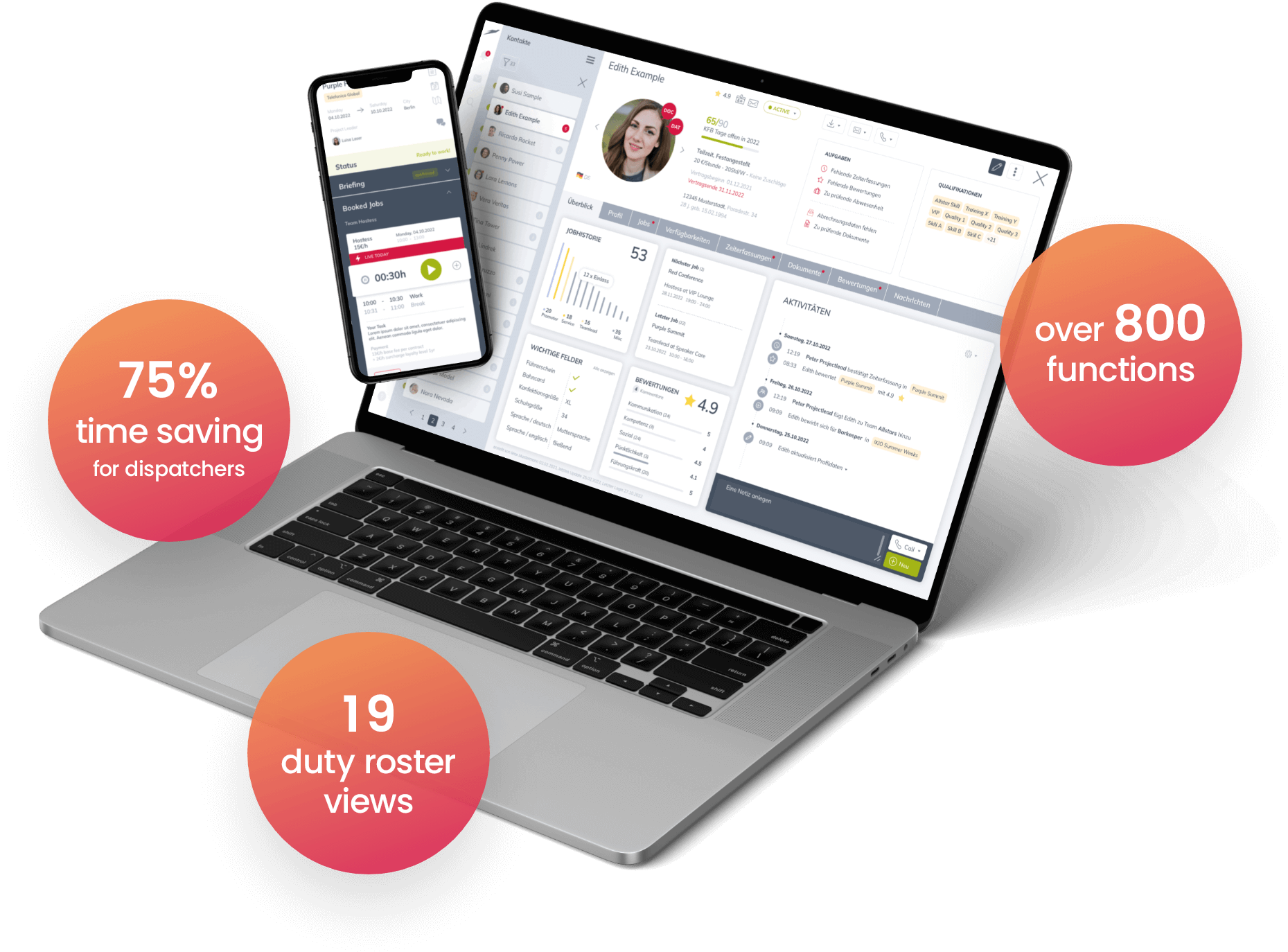
To make the entire recruitment process even more efficient, the personnel planning software Teamhero be a valuable support. With features such as digital applicant management and clear planning tools, Teamhero helps to optimize the recruitment process and attract the best talent for your company.
Disclaimer
Please note that the texts on this website and the related contributions are provided for general informational purposes only and do not constitute tax or legal advice in the proper sense. For individual cases, we always recommend seeking specific legal advice tailored to the circumstances of the situation. The information is provided to the best of our knowledge and belief, without any guarantee of accuracy, completeness, or validity.