


Measures for efficient employee recruitment!
In recent years, the battle for the best talent has intensified to the maximum. The labor market has changed radically and many companies are faced with the challenge of filling vacancies efficiently.
Due to the omnipresent shortage of skilled workers, the demands of employees have also increased. The tried-and-tested recipe for recruiting employees – publishing a job advertisement and waiting for applications – is no longer enough on its own. Companies need to be proactive, explore new avenues and use innovative approaches to stand out from the competition.
But how do you find the right employees and retain them in the long term? In this comprehensive guide, we provide a detailed overview of strategies, recruiting measures and channels that will help you to successfully attract new employees.
What is employee recruitment?
Employee recruitment refers to all of a company’s activities aimed at filling vacancies with suitable candidates.
It’s not just about finding any employees: It’s about finding the right “match” between the candidate’s qualifications and the company’s needs – and building a long-term relationship at the same time.
The term employee recruitment covers two main areas:
- Internal measures: Talent is identified and developed within the workforce, e.g. through promotions or further training.
- External measures: The company searches for new talent outside the organization, for example via job boards, social media or active sourcing.
As skilled workers become increasingly selective and expand their career options, employee recruitment is a task that requires strategic thinking and targeted recruiting measures.

Six measures for recruiting personnel
A multifaceted approach is required for effective recruitment. Here are the most tried-and-tested methods you can use to measurably increase your chances of finding suitable candidates.
1. internal measures: Use your own resources
Why go far afield when suitable talent can already be found within the company?
Internal recruiting measures are cost-efficient and also strengthen the motivation and loyalty of the existing workforce.
Career planning and internal promotions
Promote employees through targeted training programs and qualify them for higher positions. This not only improves retention, but also saves resources compared to an external search.
Employee referral programs
Who better to recommend suitable candidates than your employees? With Employee referral programs you can tap into their networks and attract high-quality employees. Additional incentives such as bonuses increase motivation.
Companies that want to win the competition for the best employees must not only think innovatively, but also act digitally.
Internal job advertisements
Communicate open positions transparently within the company – e.g. via the intranet or circulars. In this way, you give your employees the opportunity to develop further.
2. job portals: using classic channels effectively
Job portals remain one of the most important pillars of employee recruitment. They offer access to a broad target group, from career starters and lateral entrants to highly qualified specialists.
Use industry-specific platforms
In addition to large portals such as Indeed or StepStone, industry-specific platforms such as Stack Overflow (for developers) or Dribbble (for designers) are particularly valuable for finding qualified employees in a targeted manner.
Regional and local job boards
Local platforms are particularly suitable for companies that want to recruit staff in their region. This saves relocation costs and makes it easier to integrate new employees.
Use multiposting tools
The Teamhero personnel planning software enables the simultaneous publication of job advertisements on several platforms and thus maximizes your reach with little effort.
3. social media recruiting: picking up talents where they are
Social networks such as LinkedIn, Xing, Facebook and Instagram are no longer just platforms for private contacts. They have developed into valuable contact points for recruiting. Social media recruiting makes it possible to both actively search for candidates and build an attractive employer brand.
LinkedIn is particularly suitable for specialists and managers. With targeted search filters and the option to post job ads, you can reach your desired target group – but possibly also many candidates who blindly apply for jobs.
For creative industries or for addressing younger target groups, Instagram offers the opportunity to present the company authentically through visual content and to connect with interesting talents from the industry.
TikTok
More and more companies are also using TikTok to find younger employees through creative videos and to show their corporate culture in a playful way.
4. active sourcing: approaching talent directly
Active sourcing is a method that is particularly effective for recruiting staff for hard-to-fill positions. You actively approach potential candidates instead of waiting for them to apply.
- Headhunters for specialized positions
Headhunters are particularly valuable when it comes to recruiting highly qualified employees or managers. They have extensive networks and can also reach passive candidates who are not actively looking. - Build talent pools
Even if direct contact does not lead to immediate success, it is worth storing potential candidates in a talent pool. This allows you to react quickly to future vacancies.
5 Search engine marketing (SEM): Creating maximum visibility
The search for a job often starts with Google. That’s why search engine marketing is an indispensable tool in modern employee recruitment. Should not be underestimated!
- Google for Jobs
This platform lists job advertisements directly in the search results and thus enables maximum reach – free of charge for employers and applicants. - Place Google Ads
Paid ads appear directly at the top of the search results and significantly increase the visibility of your vacancies. This is particularly effective when there is an urgent need for personnel.
6 Employer branding: Putting your own employer brand in the spotlight
Strong employer branding is the key to positioning yourself as an attractive employer.
Optimize career page
Your career page is often the first point of contact with potential candidates. Make it appealing, informative and authentic.
Career films and photos
Visual content such as videos and images can be used to bring your own corporate culture to life. This creates trust and arouses interest.
Reputation management
Positive reviews on platforms such as Kununu or Glassdoor strengthen your image as an employer and attract qualified candidates.
What else do you need to look out for when recruiting staff?
In addition to the various strategies, companies should also observe the most important unwritten laws of recruitment: A slow application process deters candidates. It is best to use applicant management systems to make the process more efficient.
Make sure you comply with the GDPR, especially when storing and processing applicant data. Be authentic and do not exaggerate when presenting your company. Applicants will quickly notice whether the image you convey matches the reality.
The most important channels for recruiting employees
The choice of the right channel depends heavily on your target group. While social media is particularly suitable for young talent, experienced professionals often prefer traditional channels such as job portals or personal networks.
Strategy tip: Use a combination of active and passive measures to reach as broad a target group as possible.
Employer branding: the long-term success factor
Employer branding is the art of positioning your company as an attractive place to work and creating an emotional bond between potential and existing employees and the organization. Why is this important? Since qualified specialists can usually choose between numerous offers these days, a strong employer brand is a decisive competitive advantage.
What makes a strong employer brand?
A convincing employer brand clearly defines what sets your company apart – be it innovative projects, an appreciative corporate culture or attractive development opportunities. It highlights your unique selling points and communicates to potential employees why it is worth becoming part of your team.
Employer branding doesn’t just start with the external image, it starts inside your company. Values such as respect, transparency and team spirit must be practiced. After all, nothing is more damaging to your employer brand than if the internal perception does not match the external image.
The role of the career site: figurehead on the web
A professional career site is the heart of your employer branding. It not only serves as a platform for job advertisements, but also as a reflection of your corporate culture. Give an insight into everyday working life, show real employee testimonials and present your benefits.
It is important that the careers page is clearly laid out and mobile-friendly. Studies show that over 60% of job seekers search for jobs via smartphone. An optimized mobile view is therefore always necessary. An example: Show photos of your offices or a short video that conveys the team spirit. Make sure that users can find all relevant information within a few clicks – from the application process to the specific tasks of the advertised position.
Image films and testimonials: emotions create trust
The power of visual content is enormous. Image films and video testimonials from employees are one of the most effective ways to appeal to potential applicants. Why? Because they appear authentic.
A successful image film can be the deciding factor for potential candidates to choose you. Be sure to convey emotions as well as interesting facts: What makes working for you special? What inspires your team?
- Career films: Show in short clips what everyday working life is like. Let real employees have their say and share their experiences. Such insights create closeness and show that there are real people behind your company.
- Employee testimonials: In these videos, employees talk openly about their experiences at the company – from the challenges to the benefits. Such reports are particularly credible as they come from first-hand experience.
Out-of-home advertising: presence in everyday life
Not to be forgotten are “old-fashioned” recruiting measures such as posters or advertisements in highly frequented locations – such as train stations, universities or gyms. These “out-of-home” measures can be used specifically in the region to attract talent from your area. With a clear slogan or an appealing design, you will stand out from the crowd.
Applicant management: improving efficiency and candidate experience
However, it is not enough to simply track down the best talent – you also need to guide them efficiently and professionally through the application process so that they don’t drop out straight away. A positive candidate experience, i.e. the applicant’s experience during the process, can be achieved with structured applicant management reach.
What makes a good applicant management system?
A well-structured recruiting process saves time, increases the quality of applications and leaves a professional impression on candidates. This includes clear processes, quick feedback and transparent communication. But in practice, this is often easier said than done. That’s why there are applicant management systems (or applicant tracking systems, ATS for short).
The advantages of modern applicant management systems
An ATS automates many steps of the application process, from confirmation of receipt to the final selection. This allows HR departments to work more efficiently and maintain an overview – even with a large number of applications.
- Time savings: Recurring tasks such as preselecting candidates or sending emails are automated.
- Transparency: All applications and their status are stored in a central location, which facilitates collaboration between the HR teams.
- Candidate experience: Candidates benefit from a smooth process – for example, through clear updates and the ability to view their application status online.
Talent pools: An investment in the future
Another advantage of modern applicant management systems is the ability to build up a talent pool. Here, companies can store data on promising candidates who have applied for a position but were not hired immediately. If a suitable position becomes available later, this talent pool can be used to target candidates who have already shown interest in the company.
Avoid mistakes: What companies should not do
Even the best employee recruitment strategies can fail if companies make typical mistakes. However, these weaknesses can be easily avoided with the right planning.
Slow feedback discourages interested parties
At a time when skilled workers are in high demand, slow communication can make all the difference. If candidates wait weeks for feedback, they feel unappreciated – and may decide to look elsewhere.
Set clear time windows and automate interim messages to bridge the waiting time.
Unclear job advertisements look unprofessional
A vague or poorly worded job advertisement does not make a good impression. Candidates want to know what tasks they can expect, what qualifications are required and what benefits are offered. Make sure that every ad is precise and authentic.
Lack of transparency leads to uncertainty
An application process should be transparent for everyone involved. Clearly state how many rounds there are, which contact persons are involved and what the next steps are. Unclear processes create frustration and can lead to you losing suitable candidates.
Future trends: How employee recruitment is developing
The labor market is facing major changes and companies need to adapt to them. Modern technologies and new approaches will have a lasting impact on the way we attract employees.
Artificial intelligence: more efficiency in recruiting
Artificial intelligence (AI) is increasingly being used in recruiting to analyze applications and optimize the selection process. For example, algorithms can identify suitable candidates based on CVs or make automated recommendations for jobs. This not only makes the process more efficient, but also more objective. However, you should always maintain a balance between humanity and efficiency.
Gamification: Recruiting with a fun factor
One innovative way to find young employees in particular is the use of gamification. This involves integrating playful elements into the application process – for example, through interactive online tests that not only test candidates’ skills but are also fun. Gamification also strengthens the employer brand, as it shows that the company is innovative and modern.
Virtual reality: Immerse yourself in the world of work
Virtual Reality (VR) enables applicants to gain an insight into the company before they start work. For example, they can explore their future workplace virtually or take part in a simulated team meeting. Especially in industries that work a lot with technology, VR is a way to stand out from the competition and inspire talent.
How Teamhero supports you in recruiting employees
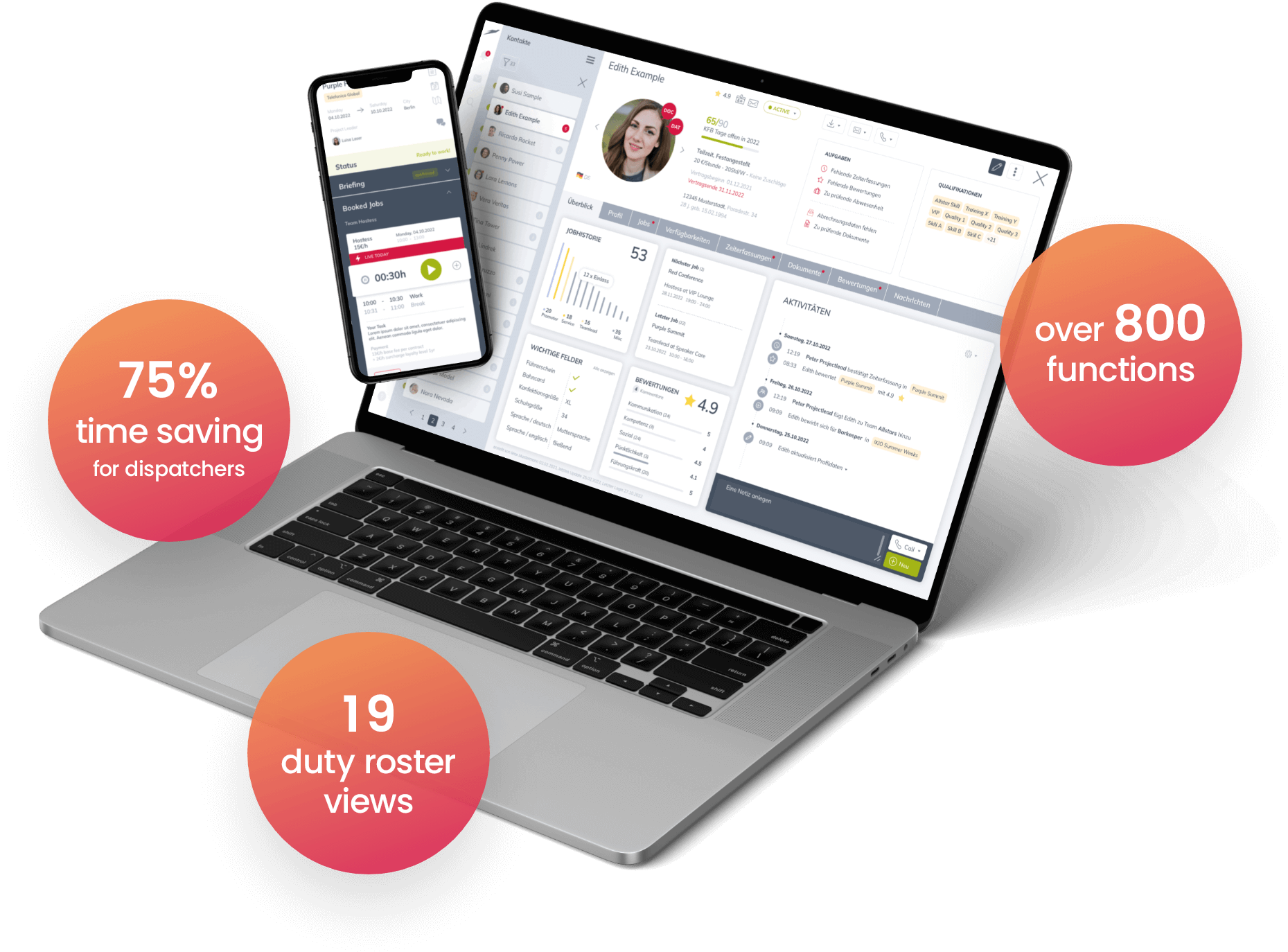
One of the biggest challenges in recruitment is to bundle all information and processes in one central location while maintaining an overview. Teamhero offers you a comprehensive solution to achieve just that.
- Digital personnel files: Store all of your employees’ relevant master data centrally and clearly. From qualifications and availabilities to individual skills – you always have a complete overview.
- Applicant management: With Teamhero, you can not only manage applications efficiently, but also recruit talent from your own talent pool. This minimizes the time you have to spend searching for candidates and gives you access to a pool of already qualified candidates.
- Automated processes: Eliminate time-consuming manual tasks. With functions such as automated feedback to applicants or the option to create groups for specific requirements, recruiting employees becomes easier.
Try out now how Teamhero supports your recruiting measures.