Reducing administrative effort with HR & payroll workflows
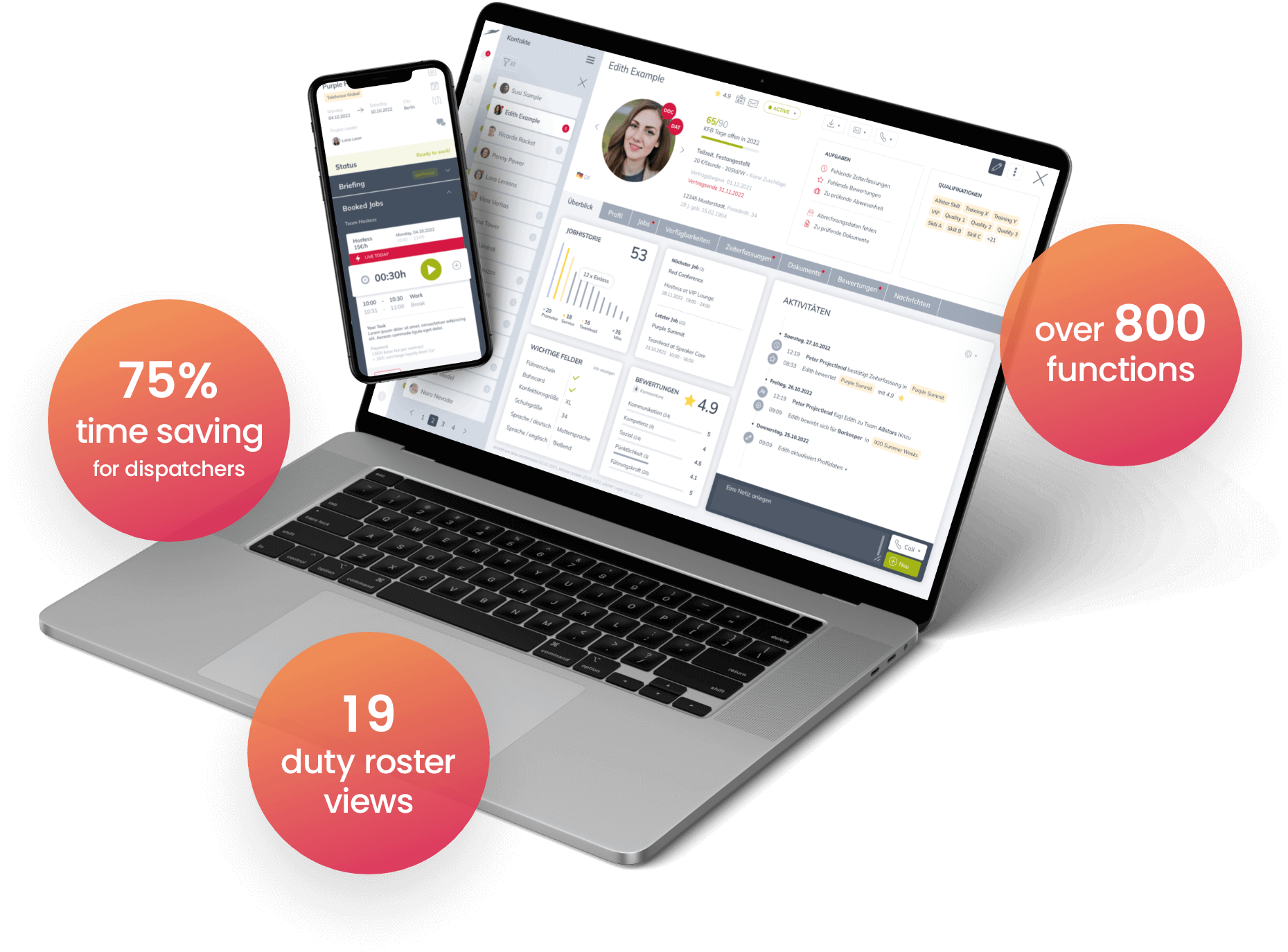
Efficient HR processes make everyday work considerably easier. Digital solutions connect HR management, time recording and payroll into a seamless workflow, which greatly simplifies the administrative tasks involved.
Bundling all information in one place also provides a clear overview of employee data, duty rosters and payroll.
Managing all processes from a single point
Companies that bring their HR and payroll processes together on one platform avoid duplicate entries and coordination problems between different departments.
On top of that, digital personnel files provide all the necessary information at the push of a button and eliminate time-consuming paperwork.
Implementing digital time recording
With digital time recording, companies reliably document working hours, breaks and overtime and make the collected data available for payroll.
Employees benefit from transparent documentation, and HR managers significantly reduce their administrative workload. Automatic reminders about open entries and plausibility checks also minimize sources of error and ensure that payroll is processed quickly and correctly.
Mobile recording via app also allows field staff to log their hours directly, with changes immediately visible in the system. Reports can be generated in real time via apps, so team leaders can quickly see whether resources are being used optimally.
Integration with absence and vacation planning further reduces coordination effort and ensures that all data remains consistent.
Making deployment planning smart
Well-designed deployment planning takes into account availability and legal requirements as well as existing qualifications. Digital tools, in turn, capture this information automatically and feed it directly into the planning.
This makes coordination between different teams easier, and short-notice changes can be implemented without hassle.
Companies typically rely on the following approaches to reduce misunderstandings and increase employee satisfaction.
- Deployment planning based on qualifications, so that suitable employees are automatically assigned to specific tasks
- Dynamic adjustment of shifts in the event of short-notice changes or special projects
Taking into account legal requirements such as rest periods and maximum working hours to ensure compliance.
Integrating payroll efficiently
Payroll systems collect all relevant data and prepare it for payroll in a legally compliant way. Automated calculations also reduce errors, and the HR department gains time for tasks that go beyond routine processes.
In addition, digital HR tools usually offer interfaces to accounting and finance software. This enables smooth data exchange and makes importing and exporting information easier. The benefits of digital payroll become particularly apparent when creating pay slips and managing employee reports.
Minimizing sources of error
Manual entries quickly lead to discrepancies between departments. End-to-end digital workflows, on the other hand, ensure that data always stays up to date and consistent, because automatic plausibility checks flag inconsistencies immediately. This allows managers to correct processes early on and prevent small errors from creeping into payroll.
Another common mistake is mixing private and business expenses. If business transactions are not clearly separated, unnecessary queries and possible corrections in payroll are the result. It also increases the bookkeeping effort. To keep finances cleanly separated, it is therefore advisable to open a business account through which business payments are processed directly.
Increasing team satisfaction
Transparent and reliable processes also promote team satisfaction. Ideally, employees can access information on working hours, vacation and payroll digitally at any time. Self-service functions in the HR system also allow them to make adjustments on their own, which reduces administrative queries.
Practical tips for a functioning workflow
For a smooth workflow, those responsible in companies should put a few proven practices into everyday use. For example, it makes sense to
- link HR management and payroll so that all data is forwarded automatically and manual transfers are no longer necessary
- record working hours digitally and transfer them directly to the payroll systems to avoid rework
- integrate regular routine tasks directly into the shift plan so they get done without follow-up questions
By consistently connecting all relevant HR and payroll processes, companies significantly reduce their administrative effort, and managers can focus more on personnel development and process optimization.