


What is thought leadership?
Competitive pressure is growing, markets are consolidating and suddenly excellent products alone are no longer enough. Companies that want to survive must go one step further: They must actively shape and steer the discussion in their industry. Thought leadership has thus developed into a potentially vital corporate strategy.
What does it mean in concrete terms for a company to establish itself as a thought leader? What measurable benefits does this bring? Our article provides information on the theory behind the concept and also provides tangible approaches for implementation.
What exactly is thought leadership?
Thought leadership means being a recognized expert in a specific field and setting new standards with innovative solutions or visionary approaches. This role is not only assumed by individuals, but also by companies that publicly share their expertise and are thus perceived as thought leaders.
The core of thought leadership is identifying the most pressing questions and challenges of the target group and presenting convincing solutions. Particularly in personnel-intensive service sectors, clear opinion leadership can offer decisive competitive advantages.
Current trends in the area of thought leadership
Thought leadership has changed dramatically in recent years. Digital transformation, artificial intelligence and remote work have opened up new communication channels. Companies that make clever use of this change also reach new markets in addition to their existing target group.
Virtual events, social media and digital whitepapers enable thought leaders to share their knowledge flexibly and scalably. Thought leaders not only provide information, but also actively create new perspectives and provide impetus.
For SMEs, thought leadership is an opportunity to assert themselves against large competitors, while large companies can consolidate their innovative strength and industry leadership. However, the strategies differ: while smaller companies score points through niche expertise, large companies often rely on extensive content initiatives and targeted branding.
Characteristics of thought leadership
Is your company considered a thought leader? Check for yourself how many of the following points apply to you.
- Pioneering role: They develop innovative solutions and shape their field with fresh ideas.
- Understanding target groups: They know the needs of their target group precisely and proactively offer answers to open questions.
- Communication skills: Thought leaders convey helpful content in an understandable and appealing way across different channels.
- Consistency: Regular publications and continuous presence consolidate the position as an opinion leader.
One example of this is the company HubSpot, which has achieved a leading position through education about inbound marketing. leading position in the B2B sector. HubSpot continuously provides valuable input for the industry through specialist articles, webinars and training materials.

Where does thought leadership come into play?
Thought leadership plays a crucial role in many areas of business – thought leadership is relevant across all industries – but it has a particular impact in service-oriented sectors with high staffing levels. Here are some specific areas of application:
Positioning personnel-intensive sectors as thought leaders
Companies in the security and event management sectors are often under great organizational pressure. Thought leadership helps to overcome difficulties and develop innovative solutions.
For example, a transport service provider could demonstrate thought leadership by sharing efficient approaches to route optimization and employee scheduling. A catering company, on the other hand, could present sustainability strategies in personnel management, for example through processes to reduce food waste or digital tools for optimized shift planning.
Thought leadership for personnel management
Companies that act as opinion leaders attract qualified specialists more easily and strengthen the loyalty of existing employees. Thought leadership can focus on fair working conditions, transparent communication processes or innovative working time models.
What are the advantages of thought leadership?
Those who are perceived as opinion leaders benefit from numerous advantages that have a direct impact on growth, innovative strength and employee retention. employee retention impact.
Increased visibility and credibility
Companies that act as thought leaders establish themselves as the first point of contact for industry-specific questions. This leads to increased visibility among customers, applicants and the general public.
The success of thought leadership in this area can be measured in concrete terms. Key performance indicators (KPIs) include the number of website visits, mentions in industry publications and the reach of specialist content on social networks.
According to Edelman Trust Barometer 2024 thought leadership correlates directly with the trustworthiness of companies. Almost three quarters of decision-makers state that thought leadership significantly increases their trust in providers.
Competitive advantages and innovative strength
Those who proactively develop and communicate new solutions shape market standards and influence the expectations of customers and competitors.
Modern technologies such as artificial intelligence (AI) and blockchain are becoming increasingly important in many areas. Thought leaders are using these technologies in a targeted manner to automate processes, make data more secure or develop new business models. Companies that respond to such developments at an early stage secure an innovative edge in the long term.
Employee retention and recruitment
In 2025, it is more important than ever for companies to be perceived as an attractive employer. Thought leadership strengthens the employer brand by presenting a company as future-oriented, transparent and innovative.
Companies that actively promote and publicly communicate topics such as flexible working time models, fair pay or digitalization are particularly attractive to young talent and qualified specialists. Thought leaders who communicate a clear vision for the future not only create trust, but also promote the Long-term retention of existing employees.
For example, a catering company that focuses on sustainable personnel planning and fair working conditions and regularly shares these approaches in specialist articles or on social media can attract applicants who share similar values. At the same time, this type of communication strengthens the existing workforce’s sense of belonging.
What are best practices for thought leadership?
The AIDA principle is a proven model in marketing that also helps to build thought leadership. It describes the four phases that potential customers or target groups go through. Thought leaders use this model to strategically shape their messages and achieve maximum impact.
Here are the four phases of the AIDA model and how they can be applied in a thought leadership context:
1. attention:
Thought leaders attract attention by presenting innovative ideas, exclusive insights or new perspectives on relevant topics. Especially in saturated markets, a clear and bold positioning helps to get noticed.
2. interest:
Once attention has been gained, the next step is to deepen interest. This is achieved through detailed analyses, case studies or practical solutions that address the real challenges of the target group.
3. desire:
Thought leadership creates a need for in-depth knowledge or specific solutions. Companies should demonstrate how their approaches solve specific problems or tap into innovation potential.
4. action (plot):
At the end, there is a call to action. Thought leaders should offer their readers clear next steps, such as participation in a webinar or direct contact with the company.
Create target group-oriented content
Successful thought leaders consistently align their communication with the needs of their target group. They identify current challenges, develop solutions and share their expertise in an understandable and practical way.
Use targeted surveys or feedback loops to better understand the information needs of your target group. This will ensure that your thought leadership content remains relevant and helpful.
Using a variety of communication channels
In order to achieve a broad reach, thought leaders should use different platforms and formats, from social media to podcasts and video content. The variety appeals to different target groups.
Maintaining consistency and authenticity
Thought leadership thrives on credibility. Companies must consistently deliver specialist content and communicate their expertise transparently. It is important to remain authentic, because empty marketing promises or superficial content damage a company’s reputation.
Genuine thought leaders not only share successes, but also challenges and solutions. This openness creates trust and signals competence.
Conclusion: More time for thought leadership thanks to efficient processes
Thought leadership enables companies to position themselves as experts, drive innovation and set new standards. However, the path to opinion leadership is challenging: it requires consistent communication, sound expertise and a clear strategy.
A decisive factor here is the time available. Those who are bogged down in administrative tasks in their day-to-day business rarely find room for creative ideas and forward-looking concepts.
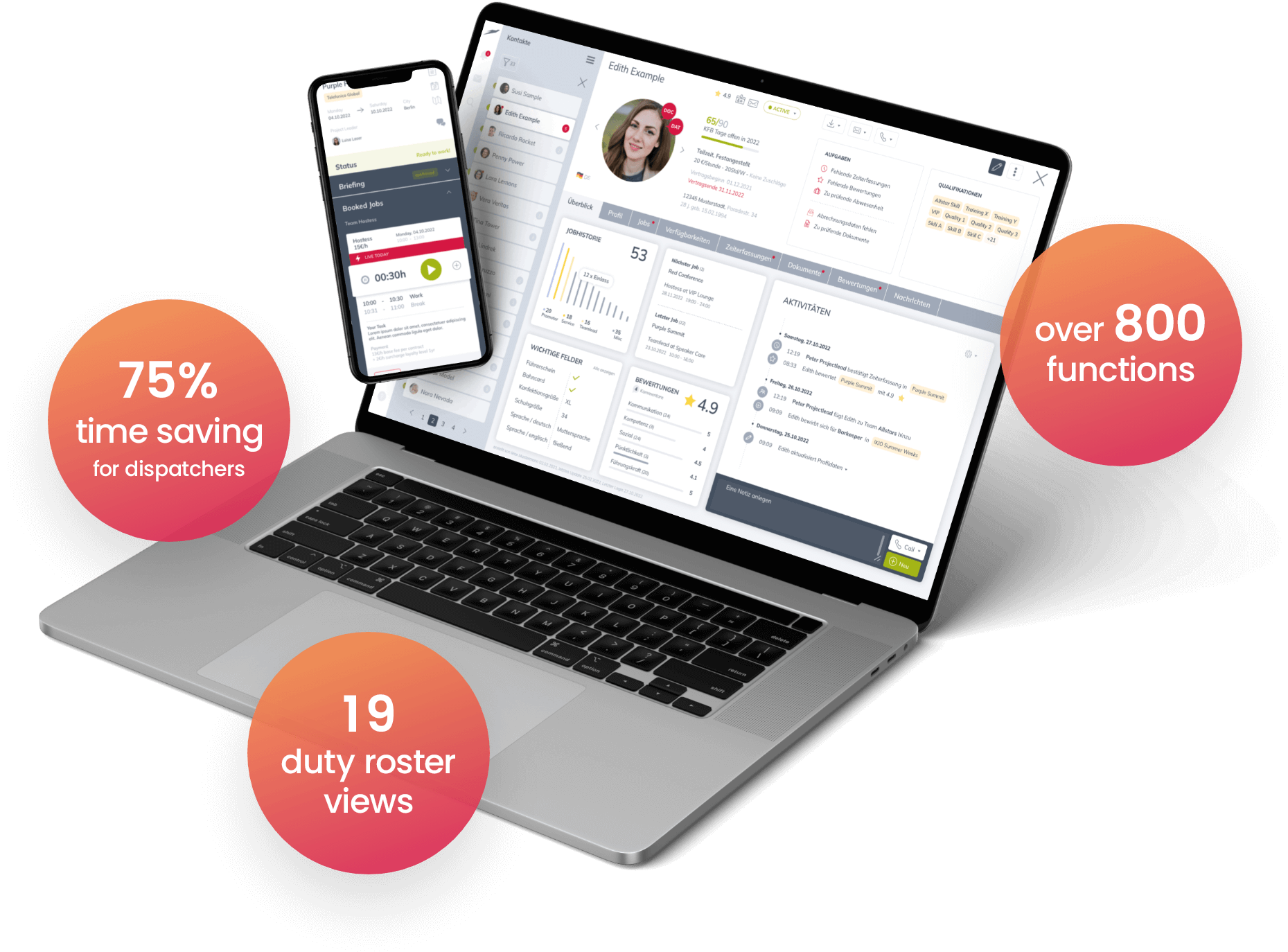
This is where Teamhero personnel management software can help by automating time-consuming processes. With Teamhero, you always have an overview of all employee data and documents, while recurring tasks run efficiently in the background. You can invest the time you save in the development of your thought leadership.