


Skill management
What is skills management?
Skills management describes the systematic recording, organization and development of the skills of all employees in an organization.
Skills management begins with the identification, assessment and monitoring of the existing skills of all employees. Measures to improve and adapt skills are also planned and implemented.
Skill management enables an organization to make optimum use of its skills, identify bottlenecks and provide employees with targeted support. It is an important part of personnel development and helps to strengthen the organization’s performance and competitiveness.
What are the advantages of skill management?
In order to make an organization more successful, the people with the necessary skills must work in the right places in the company or on the right tasks. Knowing to what extent and in what quality skills are developed also helps to understand where and how the performance of the employees and thus the organization can be increased.
Bill Gates once said:
“Take away our twenty best people and I tell you that Microsoft would become an irrelevant company.”
For these reasons, professional skill management offers several advantages. The presentation can be achieved via lists, an organization chart or a skill tree.
Identification, selection, development and retention of employees
In teams, there are often top performers who are particularly talented, fast and complete tasks to a high standard. These people are often referred to as high performers. These people are often characterized by an extensive skillset. Knowing exactly which skills lead to achieving a desired result can bring many advantages.
Especially when such top performers leave a team or organization, performance often drops. By precisely identifying skills, it can be ensured that other employees are also trained in these skills. In this way, the basic performance can be increased and a loss of performance when such a person leaves can be greatly optimized.
Recognizing and closing skill gaps
As soon as an organization systematically records the skills of its employees and compares them with the market requirements, e.g. for product development or marketing, gaps or weaknesses immediately become apparent. Either the necessary skills are not available at all or only very poorly developed. Skill management therefore supports strategic personnel planning. Personnel planners can search specifically for new employees with the right skills or plan appropriate training measures.
Decision-making aids for succession planning
Recognizing exactly and fairly which employees have which skills supports the ability to identify the right employees for the right promotion or succession. In management development in particular, this makes it possible to organize a promotion in combination with further training. This makes it possible to promote employees from within the company and equip them with the necessary skills.
Increase team motivation
By knowing the skills of individual employees, tasks can be better distributed within teams. This increases the productivity of a team, which in turn increases the performance of the organization.
Strengthen employee loyalty and increase motivation
If employees’ skills are known, tasks can be expressed and delegated in a more targeted manner. It is automatically clearer when a task is assigned where the necessary ability to complete it is lacking. This is because tasks can often be very demotivating if the necessary ability to complete them is lacking. This leads to employees being overwhelmed. A transparent overview of skills also makes it possible to agree on targeted further training and development of skills. This has a motivating and therefore binding effect on the relationship between employee and employer.
What are the requirements for skill management?
Elaborate documentation
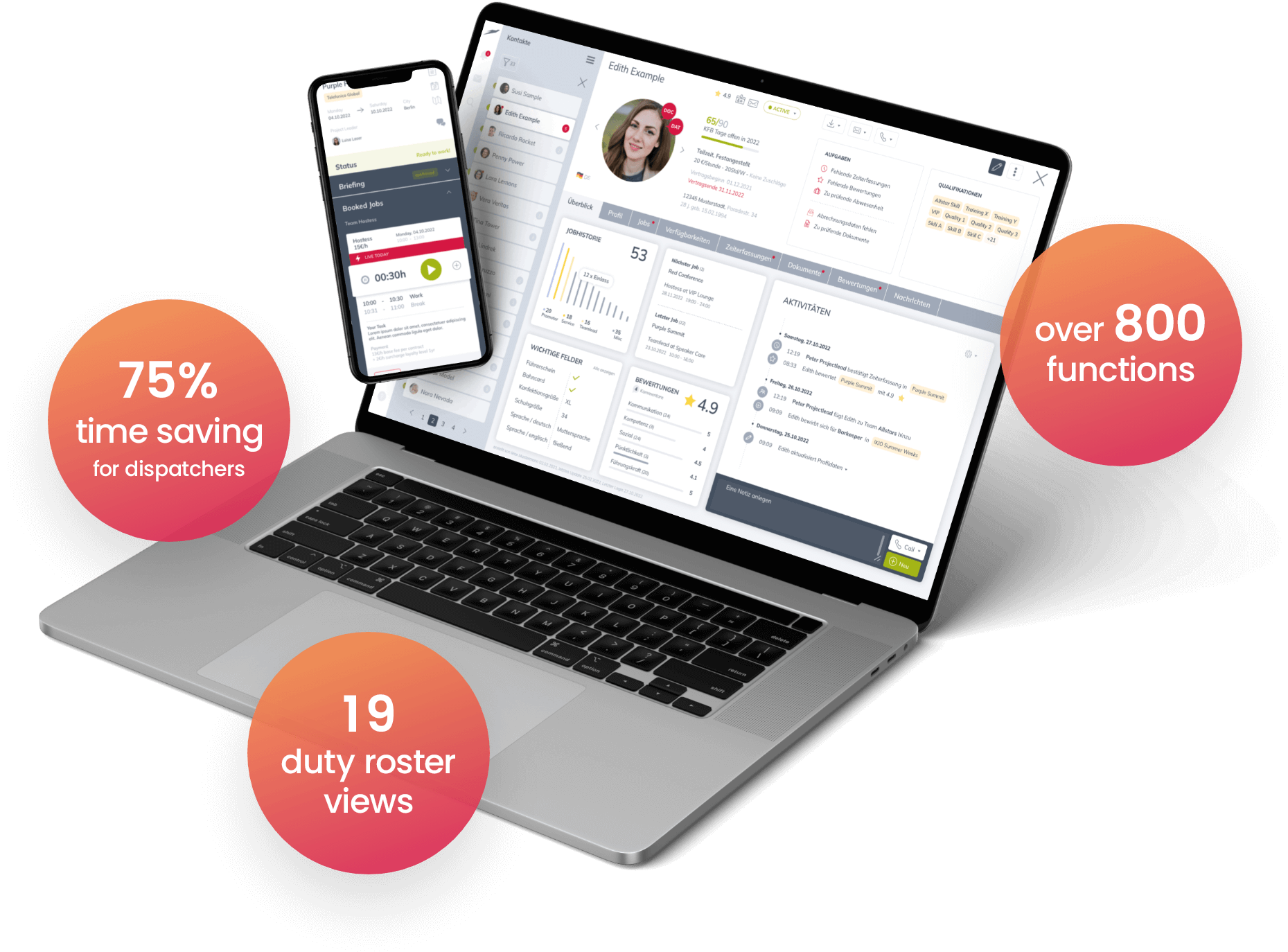
In order to set up a skills management system for employees, time and energy must be invested. All necessary skills must be recorded and, based on this, all employees must be analyzed. Software tools such as Teamhero help to organize these skills.
However, an assessment must be carried out independently and individually by the personnel planners. However, once the system has been established, a lot of time and money can be saved, as the assessment and further development of necessary skills can be carried out much faster.
Approval by employees
Since this is personal data of employees, it is also necessary to obtain the permission of employees for the systematic processing of this data before systematically recording skills. According to the data protection guidelines in Europe, a person always has the right to know whether data, which category of data and which data is specifically stored about them in an organization.
This aspect should therefore be taken into account when setting up skills management.
Summary
Skill management is a good tool for increasing the performance of an organization. Furthermore, more satisfaction and optimal further training can be achieved for every employee.
- Targeted employee development
- Putting teams together better
- search more specifically for the right applicants
- improve performance
Disclaimer
Please note that the texts on this website and the related contributions are provided for general informational purposes only and do not constitute tax or legal advice in the proper sense. For individual cases, we always recommend seeking specific legal advice tailored to the circumstances of the situation. The information is provided to the best of our knowledge and belief, without any guarantee of accuracy, completeness, or validity.