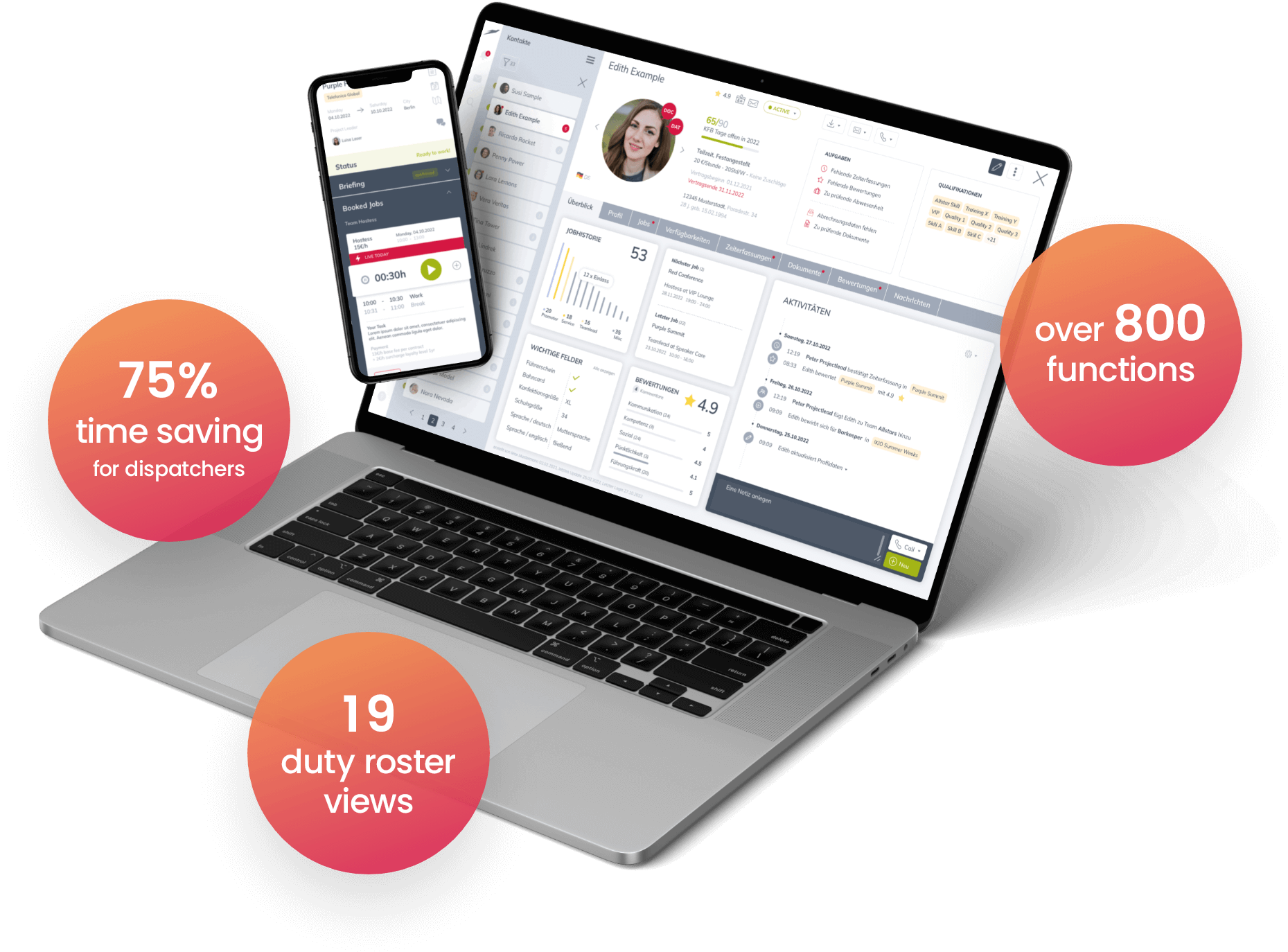



Personnel file
The personnel file is a collection of data relating to an individual employee. It contains information about the person and the employment relationship in the company.
Purpose of the personnel file
The aim of the file is to provide a complete and accurate picture of the colleague’s career. Nowadays, this file is usually no longer created in paper form. Most companies create an electronic personnel file.
When it comes to digital personnel files, companies must pay greater attention to data protection, as these are sensitive issues.
That’s what it says: The content
The contents of a personnel file often look like this:
- Application documents
- Employment contract
- Warnings (can be deleted after a certain period of time)
- Special agreements
- Correspondence between employer & employee
- Personnel questionnaires
- Social security details
- Health insurance
- Reports of industrial accidents
- Tax documents
- Certificates
- Old job references
- Vacation requests & approvals
- Loans & wage garnishments
- Note on membership of the works council (if available)
- Letter of resignation & reference
Personnel file: This is prohibited
No information about private matters may be included. This means there must be no copy of the Facebook or Instagram profile. It must also not contain any medical findings or similar information.
It is also important to note that the employer is prohibited from keeping a “secret file”.
In addition, according to the Works Constitution Act, employees may inspect their personnel file at any time and without any reason. It makes sense to make use of this right at regular intervals, as companies are not obliged to inform their employees of any changes.
In addition, the employee may take notes during the meeting and, if necessary, make copies and consult a member of the works council. However, the employee may not take the file with them for a certain period of time.
Disclaimer
Please note that the texts on this website and the related contributions are provided for general informational purposes only and do not constitute tax or legal advice in the proper sense. For individual cases, we always recommend seeking specific legal advice tailored to the circumstances of the situation. The information is provided to the best of our knowledge and belief, without any guarantee of accuracy, completeness, or validity.