Imagine if no one forgot to sign out at the time clock or fill in their timesheet and the HR department didn’t spend a lot of time chasing missing information.
And even if, at the end of the day or week, all the documents are in the designated tray on time: Who adds up the individual working hours and transfers them into the system or the Excel spreadsheet with as few transposed figures as possible? Work steps like these are very time-consuming and have no place in the digital working world.
Not only are there much faster alternatives for recording employees’ working times, there are also much clearer and tamper-proof options. One of them is the Teamhero personnel planning software.
Definition: What does working time recording mean?
Employees of companies, agencies, firms or craft businesses usually have a contract that specifies how many hours they have to work per week or month. The maximum number of hours is regulated by the Working Hours Act.
In order to check whether employees are fulfilling their duties and to ensure that they do not exceed the maximum working hours and comply with the legally prescribed rest periods, working hours are recorded. This can be done in different ways: In the past, timesheets, time clocks or time clocks were the means to an end. Today, almost all employers rely on an electronic or digital time recording system.
The start and end of the working day as well as break times and other absences are documented as part of the working time recording process. Pay slips can then be created on the basis of the recorded data.
Which sectors are required to record working hours?
As the owner of a company, the question arises as to whether it is a legal requirement to record employees’ working hours. The answer is yes. It was not until the end of 2022 that the Federal Labor Court ruled that systematic recording of working hours is mandatory for all employers. This decision was preceded by the so-called time clock ruling of the European Court of Justice (ECJ) from May 2019.
Before the documentation requirement was adopted in conjunction with a reliable, objective and accessible system, the German Working Hours Act only required overtime and work on Sundays and public holidays to be recorded. However, maximum daily working hours and the minimum duration of rest and break times were already stipulated by law.
While some occupational groups such as ship crews, chief physicians, employees in the public church service, managers and managing directors are exempt from these regulations, no sector is exempt from recording working time.
What criteria must a working time recording system fulfill?
Whether digital or analog, companies can decide for themselves how working times are recorded. It must be a legally compliant variant that makes it possible to record the start, end and duration of working hours as well as break times and overtime, ideally in a tamper-proof manner.
Digital time recording systems such as the Teamhero duty roster software offer the advantage that working times can be entered and documented effortlessly, clearly, quickly, easily, correctly and securely thanks to automated processes – either by the employees themselves or by their supervisors.
However, not every company has the same level of digitalization. Small businesses in particular still rely on timesheets, Excel spreadsheets, time clocks and time clocks. There is nothing wrong with this, but digital or electronic solutions such as a stationary sign-in and sign-out system in the foyer are much more reliable and ensure faster processing of the recorded data.
Data protection and working time recording: how do they go together?
Data security is always an issue with digital applications. Who has access to the recorded working times and personal data? How long can they be stored? And is it even legitimate to record working hours? As the documentation obligation is prescribed by law, the question of whether working time recording is permitted is superfluous. However, it must not violate the provisions of the General Data Protection Regulation (GDPR).
The scope and duration of the collection are clearly regulated: only as much data as necessary and required for the purpose. Once the prescribed retention period has expired, the stored information must also be deleted. The aim of recording working time is not permanent monitoring, but to measure and verify the actual time worked.
Tips for companies: Working time recording – but the right way!
If you opt for a digital working time recording system such as the Teamhero personnel planning app, you can’t really go wrong, as the tool does almost all the work. To ensure that employees do not feel controlled or monitored, they should be informed as much as possible about why which data is collected and how it is processed. The more transparency, the greater the trust.
Explain to your employees that it is also beneficial for them if their working hours can be verified. Acceptance of a tool is also increased by clarifying exactly who has access to the data. Unauthorized persons should not be able to log into the system and access must be controlled. Incidentally, employment law not only stipulates that working hours must be recorded, but also that records must be kept for at least two years.
Everything at a glance: Working time recording with Teamhero
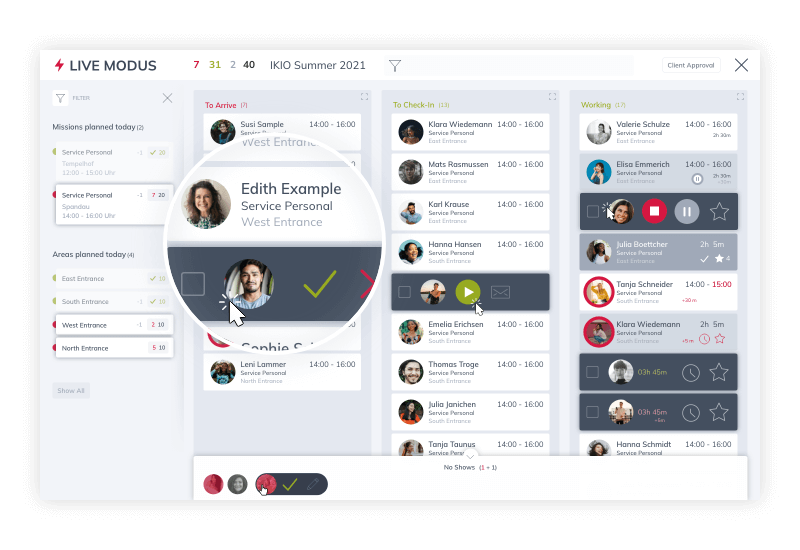
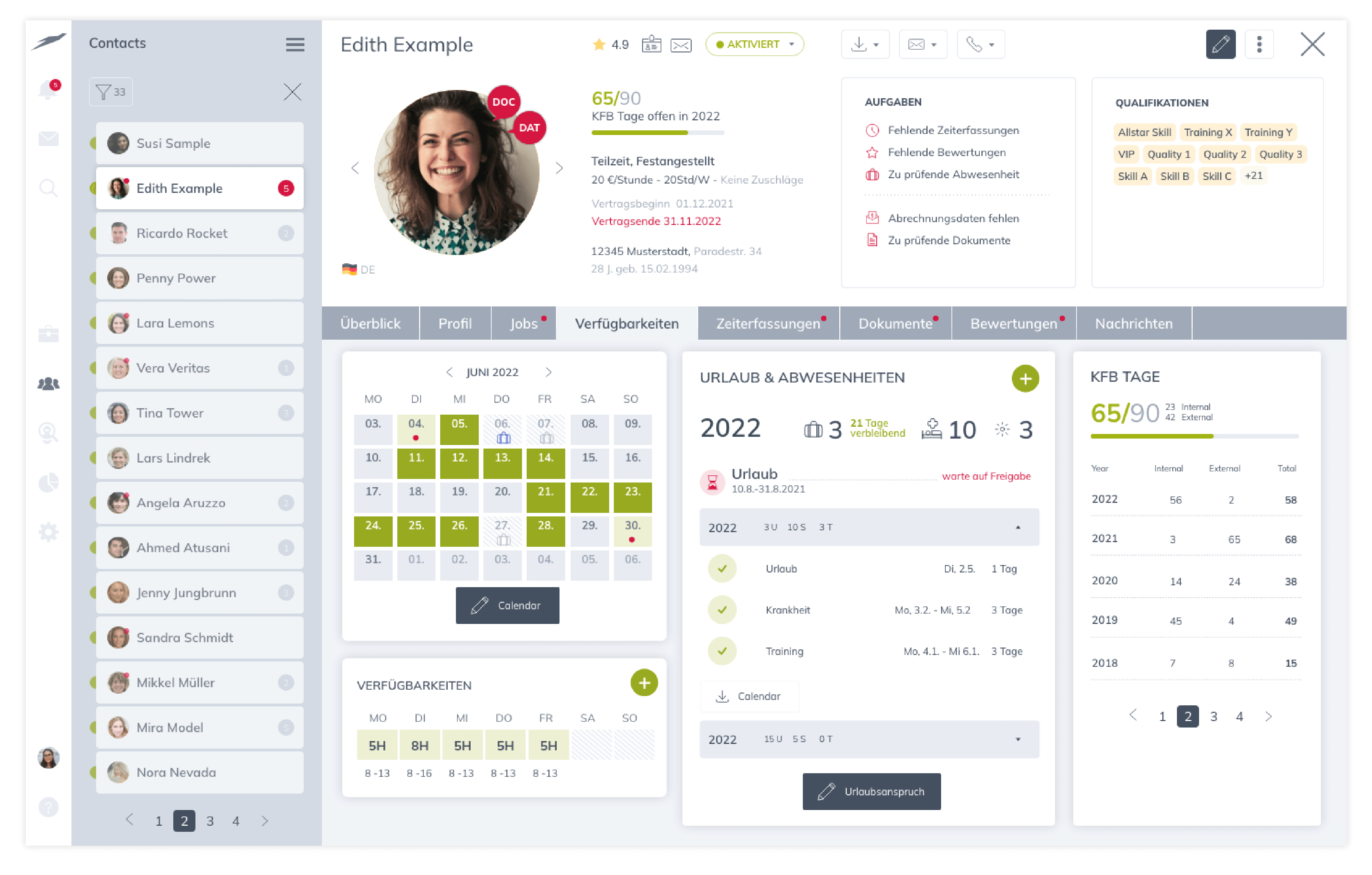
Back to Teamhero! What makes the time recording system so good? On the one hand, it is the basic functions that make the tool an important tool for every company: for example, entering and evaluating working hours, tracking overtime and checking the attendance of all scheduled employees.
The advantages are obvious: the HR department, which is primarily responsible for keeping track of all employees’ working hours, saves a lot of time and stress. The tool also makes recording more secure, transparent and reliable. Even when working from home, the start and end of the working day can be entered in real time, as access is possible from anywhere – even via smartphone. A time clock is much less flexible in this respect.
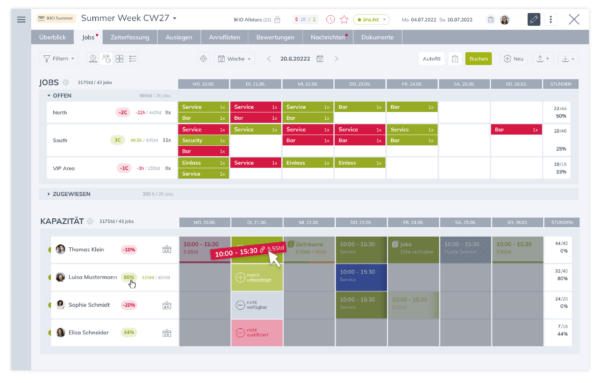
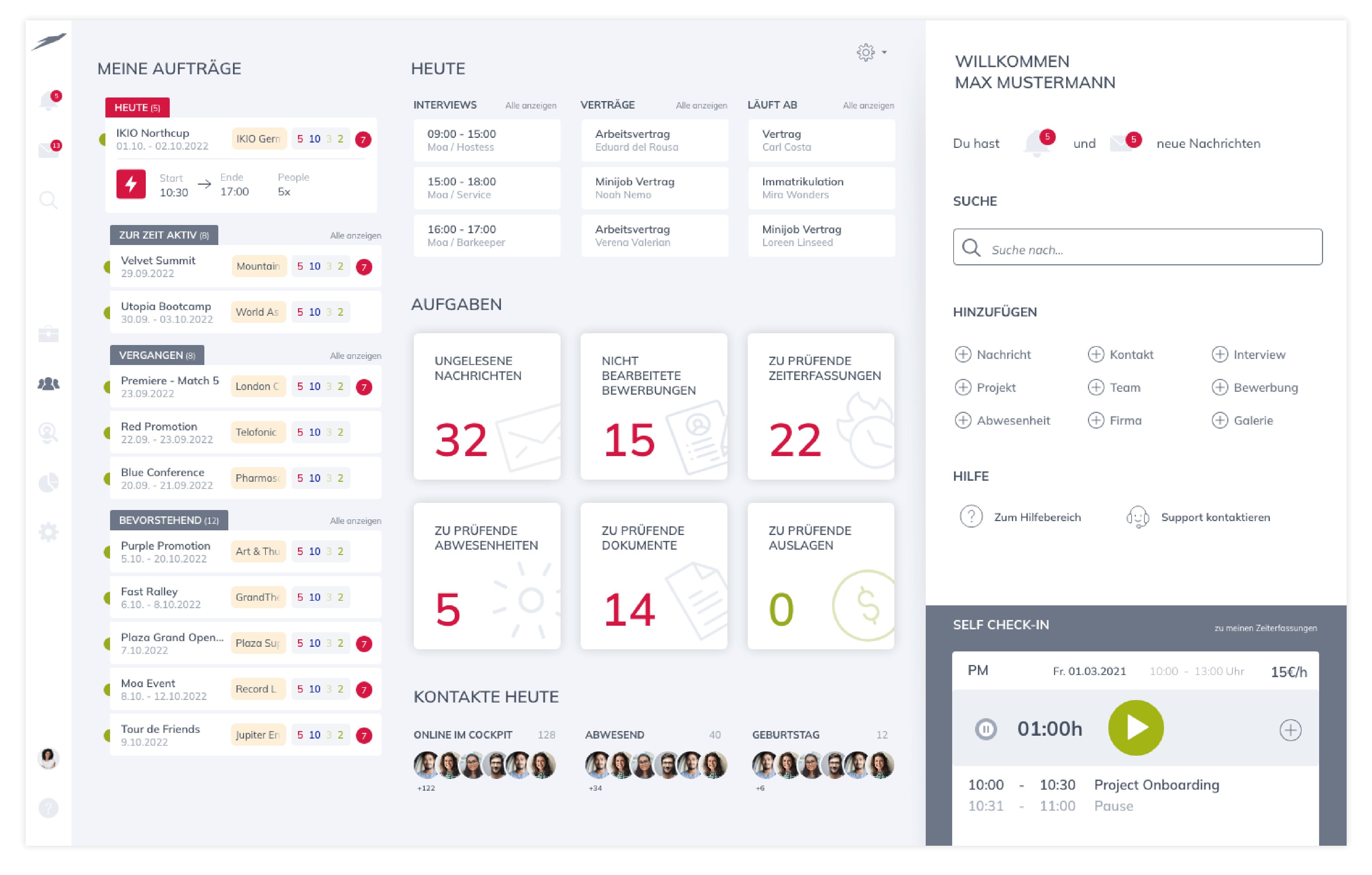
But Teamhero can do more than just record working hours: as all-round HR software, it also supports the creation of duty rosters, staffing shifts, recruiting new colleagues, publishing job advertisements, filing documents, employee communication and many other tasks that are on the agenda in every company or craft business.